


Brand indicators for message identification (BIMI) is a new email authentication protocol facilitating brands to display their logos in customers' email inboxes. The recipient can establish trust and legitimacy with the sender by seeing this emblem in the email next to the sender's name.
BIMI’s purpose is to offer an extra layer of security and legitimacy to email communication, which can help to thwart phishing scams and enhance email recipients' overall user experiences.
Many organizations use email encryption software to further enhance the security of information traveling through email servers.
BIMI allows email senders to show their brand logos alongside their emails in the recipient's inbox. This verifies that the email is authentic and not a phishing attempt, with the logo aiding in building trust and authenticity with the recipient.
Engineers should configure domain-based message authentication, reporting, and conformance (DMARC) authentication for the email sender's domain before using BIMI. Once DMARC is configured, the email sender can add a BIMI record to their domain name system (DNS) that indicates where their company logo is located. The BIMI record also contains guidelines that must be followed for the logo to appear next to the email.
When a recipient receives an email, the recipient's email client checks to verify whether the DMARC authentication was successful and whether a BIMI record for the sender's domain exists. The client retrieves the sender's corporate logo from the designated location and displays it next to the email in the recipient's inbox if all requirements are satisfied.
Despite being a strong open system that can distinguish between reliable and unreliable messages, BIMI also has several other business-oriented benefits besides technical ones.
Some of the key features of BIMI include:
BIMI uses brand indicators for domain owners, end users, and mail recipients. However, it’s still vulnerable to security exploits used by malicious hackers. Enforce the following measures to maintain security.
Brand indicators for message identification and sender policy frameworks are two different email authentication protocols.
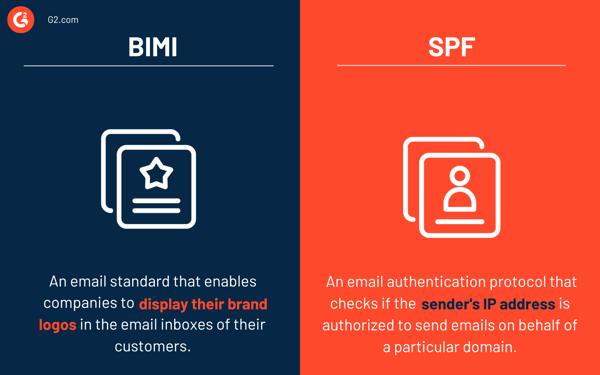
BIMI is a new email standard that enables companies to display their brand logos in the email inboxes of their customers. It requires the implementation of both SPF and DKIM email authentication protocols, along with a verified mark certificate (VMC).
BIMI is designed to enhance the visual recognition of an email's sender by displaying the sender's logo in the email client's interface.
SPF is an email authentication protocol that checks whether the sender's IP address is authorized to send emails on behalf of a particular domain. Sender policy frameworks help prevent email spoofing and phishing attacks by verifying that the sender can send emails to that domain.
Learn more about spoofing and explore ways to protect against it in an organization.


What is DNS security? Domain name system (DNS) security is the process of securing the DNS...
by Sagar Joshi

What is cloud edge security? Cloud edge security protects the intersections of cloud...
by Sagar Joshi

What is workload capacity? Workload capacity measures tasks, activities, or projects that an...
by Sagar Joshi