

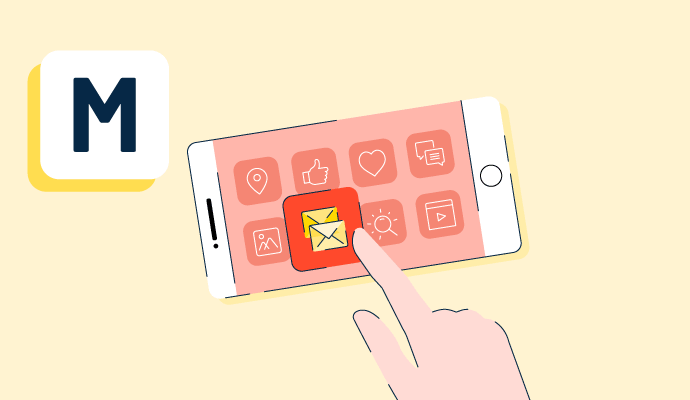
Mobile marketing is a digital marketing strategy that helps businesses reach people on smartphones, tablets, and other mobile devices. It uses channels like SMS, mobile apps, social media, mobile search, and push notifications to deliver timely messages, drive engagement, and increase conversions.
Businesses use mobile marketing to connect with customers where they spend a large share of their digital time. It supports promotion, retention, local discovery, and personalized communication across mobile web, apps, and messaging experiences.
Companies use mobile marketing software to plan, implement, and control a range of marketing campaigns that target mobile devices, such as smartphones or tablets, within mobile web browsers and applications.
Mobile marketing enables businesses to reach customers on smartphones and tablets via SMS, apps, search, social media, and push notifications. It is used to drive awareness, engagement, local discovery, and conversions, while offering benefits such as broader reach, personalization, location targeting, and measurable performance.
Mobile marketing includes several common formats, including SMS marketing, mobile apps, in-game ads, location-based campaigns, QR codes, paid search, social media, and mobile image ads. Each type supports a different goal, such as driving traffic, boosting engagement, increasing sales, or improving local visibility.
The core elements of mobile marketing are design and usability, traffic funnels, content, and site speed. Together, these elements shape how smoothly people move from seeing a message to clicking, engaging, and converting on a smaller screen.
Mobile marketing works by identifying a target audience, choosing the right channel, delivering a message optimized for mobile, and tracking how people respond. The process usually combines audience targeting, creative formatting, automation, and performance measurement to improve results over time.
Mobile marketing helps businesses reach large audiences, run cost-effective campaigns, personalize communication, target by location, and measure performance clearly. It is especially useful for brands that want fast customer engagement and flexible campaign options across multiple mobile channels.
Mobile marketing offers strong reach and flexibility, but it also comes with challenges such as privacy expectations, limited screen space, fragmented devices and platforms, and measurement complexity. These issues affect campaign design, data collection, and the consistency of the customer experience.
The best mobile marketing practices focus on mobile-friendly websites, local and voice visibility, and using software to automate and measure campaigns. These practices help businesses improve user experience, increase discoverability, and manage cross-channel performance more effectively.
Mobile marketing and email marketing both support digital communication, but they differ in channels, immediacy, and user context. Mobile marketing includes SMS, apps, social, search, and location-based experiences, while email marketing is centered on the inbox and usually supports longer-form communication.
| Mobile marketing | Email marketing |
| A digital marketing approach that reaches users on smartphones, tablets, and other mobile devices across several channels. | A digital marketing method that sends messages to a subscriber list through email. |
| It supports real-time, location-aware, app-based, and message-based interactions beyond email alone. | It is inbox-based and often better suited for newsletters, nurture sequences, and longer promotional content. |
Have unanswered questions? Find the answers below.
Common mobile marketing mistakes include sending too many messages, using pages that are not mobile-friendly, and writing content that is too long for small screens. Businesses also run into trouble when they ignore consent, skip audience targeting, or fail to track results. The strongest mobile campaigns are timely, easy to use, and built around a clear next step.
The most common form of mobile advertising is social media and display advertising on smartphones, with SMS marketing also being one of the most widely used direct mobile channels. In practice, the most common format depends on the goal. Social and display ads are often used for reach and awareness, while SMS is widely used for promotions, reminders, and direct response.
Start mobile marketing by focusing on one goal, one audience, and one channel. Begin with a mobile-friendly website, then choose a channel like SMS, social ads, or mobile search. Create short messages with a clear call to action, track performance, and refine your approach based on what works best.
Mobile marketing can be used to promote almost any product or service that people can discover, compare, or buy on a mobile device. Common examples include e-commerce products, restaurant offers, retail promotions, event tickets, software subscriptions, financial services, travel bookings, and local services.
Mobile marketing reaches people on the go, but converting that attention depends on the full customer journey. Explore lead generation to see how businesses turn mobile traffic into real opportunities.

Mara Calvello is a Content and Communications Manager at G2. She received her Bachelor of Arts degree from Elmhurst College (now Elmhurst University). Mara writes content highlighting G2 newsroom events and customer marketing case studies, while also focusing on social media and communications for G2. She previously wrote content to support our G2 Tea newsletter, as well as categories on artificial intelligence, natural language understanding (NLU), AI code generation, synthetic data, and more. In her spare time, she's out exploring with her rescue dog Zeke or enjoying a good book.

What is mobile commerce? Mobile commerce, or m-commerce, occurs when financial transactions...
.jpg) by Aayushi Sanghavi
by Aayushi Sanghavi

Struggling to get your customers to return your calls or your emails?
 by Lauren Pope

Last updated: August 6, 2026 What is mobile attribution? Mobile attribution is the process of...
by Mara Calvello
What is mobile commerce? Mobile commerce, or m-commerce, occurs when financial transactions...
by Aayushi Sanghavi
Struggling to get your customers to return your calls or your emails?
by Lauren Pope